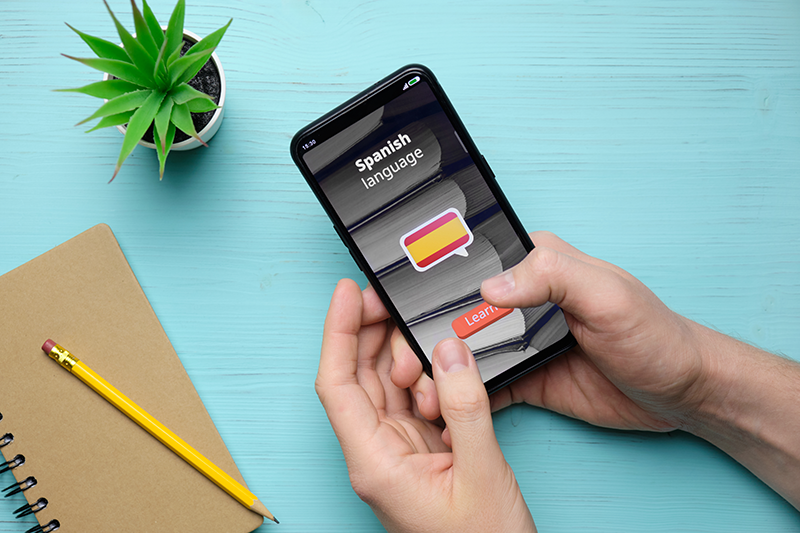
Learning Spanish can open doors to international education, travel, career opportunities, and communication with people around the world. If you want to prove your Spanish language skills with an internationally recognized certification, the DELE (Diplomas de Español como Lengua Extranjera) exam is an excellent option.
However, preparing for DELE can feel challenging, especially if you are appearing for the exam for the first time. The good news is that with the right strategy, consistent practice, and a clear understanding of the exam format, you can prepare confidently and aim to clear it on your first attempt.
Practical tips to help you prepare for the DELE Spanish Language Certification Exam.
1. Understand the DELE Exam Format
Before you start studying, understand what the DELE exam actually tests. The exam evaluates different Spanish language skills, including reading, listening, writing, and speaking.
The exam level you choose also matters. DELE is available at different levels, from beginner to advanced. These levels broadly follow the Common European Framework of Reference for Languages (CEFR).
Knowing your level and the requirements of your specific DELE exam will help you create a focused study plan instead of spending time on topics that may not be relevant.
2. Build a Strong Spanish Vocabulary
Vocabulary plays an important role in almost every part of the DELE exam. A good vocabulary helps you understand reading passages, follow conversations, express your ideas in writing, and speak more confidently.
Instead of trying to memorize hundreds of words at once, learn vocabulary in groups based on everyday topics such as:
- Family and relationships
- Education
- Work and careers
- Travel
- Food and restaurants
- Health
- Environment
- Technology
- Society and culture
Try using new words in sentences. This makes it easier to remember them and understand how they are naturally used.
3. Focus on Spanish Grammar
Grammar can be one of the more challenging areas for Spanish learners. Pay special attention to verb conjugations, tenses, articles, pronouns, gender and number agreement, prepositions, and sentence structure.
Spanish verbs deserve particular attention because the meaning can change depending on the tense and context.
Don’t aim to learn grammar only by memorizing rules. Practice by creating your own sentences and using Spanish in everyday situations. The more you use a grammar concept, the more naturally it will come to you.
4. Practice Reading Every Day
The reading section tests more than your vocabulary. You need to understand the main idea, identify specific information, and interpret meaning from context.
Make Spanish reading a daily habit. You can start with simple articles, short stories, blogs, or news content suitable for your level.
While reading, avoid translating every word into English or your native language. Instead, try to understand the overall meaning first. If you find an unfamiliar word, use the surrounding sentence to guess its meaning.
This approach can improve both your reading speed and comprehension.
5. Improve Your Listening Skills
Spanish spoken by native speakers can sound fast when you are still learning. Regular listening practice is therefore essential for DELE preparation.
Listen to Spanish podcasts, interviews, videos, news, or educational content according to your level. Initially, you can use subtitles if needed. Gradually reduce your dependence on them.
Try listening to different accents and speaking styles. This will help you become more comfortable with natural Spanish conversations and improve your ability to identify key information.
6. Don’t Ignore the Writing Section
Many students concentrate heavily on grammar and vocabulary but don’t practice writing enough.
For DELE, you should be comfortable expressing your thoughts clearly and organizing your response logically. Practice writing emails, letters, opinions, descriptions, and short essays according to your exam level.
After writing, check:
- Is the message clear?
- Are the sentences grammatically correct?
- Have you used appropriate vocabulary?
- Are your ideas organized?
- Have you answered all parts of the task?
Regular writing practice can make a significant difference in your confidence.
7. Speak Spanish Regularly
Speaking Spanish once or twice a week is usually not enough if you want to become comfortable speaking under exam conditions.
Try to speak Spanish every day, even if it is only for 10–15 minutes. Talk about your daily routine, hobbies, family, studies, work, travel plans, or opinions about common topics.
You can also practice speaking with a teacher, language partner, or fellow learner.
Don’t worry about making mistakes. Making mistakes is a normal part of language learning. The goal is to become more fluent and communicate your ideas clearly.
8. Take Practice Tests
One of the best ways to prepare for DELE is to take mock tests before the actual exam.
Practice tests help you understand the type of questions you may encounter and, more importantly, help you manage your time.
Try taking a complete mock test under exam-like conditions. Afterward, identify your weak areas. If you consistently struggle with listening, for example, dedicate more time to listening practice rather than simply repeating the areas you already know well.
9. Create a Realistic Study Schedule
You don’t necessarily need to study Spanish for several hours every day. Consistency is more important than studying intensely for a few days and then stopping.
Create a weekly schedule that includes all four major skills:
Reading + Listening + Writing + Speaking
For example, you could spend some time on vocabulary and grammar, followed by reading or listening practice, and dedicate separate sessions to speaking and writing.
Set small, achievable goals and track your progress. This can keep your preparation organized and motivating.
10. Stay Calm on Exam Day
Good preparation is important, but your mindset also matters.
Read the instructions carefully before starting each section. Keep track of time and avoid spending too long on one question. During the speaking section, focus on communicating your ideas rather than trying to produce perfect sentences.
If you don’t understand something immediately, stay calm and move forward. A single difficult question does not determine your entire result.
Prepare Smart and Give Yourself the Best Chance
Cracking the DELE Spanish Language Certification Exam on your first attempt is possible with the right preparation strategy. Start by understanding your exam level, build your vocabulary and grammar, practice all four language skills, take mock tests, and maintain a consistent study routine.
Most importantly, don’t treat DELE preparation as simply an exam to pass. Use the preparation period to develop practical Spanish communication skills. This will not only help you perform better in the exam but also make you more confident when using Spanish in real-life situations.
Learn Spanish with Cambridge Institute, Mumbai
If you are looking for structured Spanish language training in Mumbai, Cambridge Institute, Mumbai can help you build your language skills with guided learning and regular practice. With focused training in Spanish communication, grammar, vocabulary, and exam-oriented preparation, students can develop the confidence needed for language certification exams such as DELE. Whether you are starting Spanish from the basics or preparing to strengthen your existing skills, the right guidance and consistent practice can make your learning journey more effective.
Frequently Asked Questions
1. What is the DELE Spanish exam?
DELE is an internationally recognized Spanish language certification that assesses Spanish proficiency at different levels.
2. Can I clear DELE on my first attempt?
Yes. With consistent preparation, practice tests, and focused improvement in reading, listening, writing, and speaking, you can aim to clear DELE on your first attempt.
3. How should I prepare for DELE?
Understand your exam level, study Spanish grammar and vocabulary, practice all four language skills, and regularly take mock tests.
4. Is speaking practice important for DELE?
Yes. Speaking practice helps improve fluency, confidence, pronunciation, and your ability to express ideas during the oral component.
5. How long does it take to prepare for DELE?
Preparation time depends on your current Spanish level, target DELE level, and how consistently you study.